Collarbone (Clavicle) - Shoulder Pain
Acromioclavicular (AC) Joint Separation
Acromioclavicular (AC) joint separation injuries can vary in severity. The AC joint plays a vital role in normal shoulder function. The shoulder complex consists of five joints (three synovial joints and two pseudo joints), and the AC joint is one of them. Each shoulder has an AC joint, which attaches one end of the clavicle (collarbone) to the acromion of the scapula. Hyaline cartilage covers the ends of the bones where they meet. A synovial capsule containing synovial fluid then surrounds the joint. Ligaments reinforce and hold the joint ends in place while allowing joint movement. The green area in the image below highlights the AC Joint.

Acromioclavicular (AC) Joint Separation
Images produced with kind permission of 3d4medical.com from Essential Anatomy 5
(Copyright © 2018 - 2024 3D4Medical. All rights reserved.)
The clavicle is the only bone attaching the shoulder to the torso. Other soft tissues and structures support AC joint integrity and function. Fascia , muscles, ligaments, and tendons all assist in load transfer. Soft tissues limit the amount of force on the AC joint. AC joint separation can occur if forces exceed what the joint and supporting tissues can cope with. Injury mechanisms, forces involved, and individual factors impact injury severity. Hence, no two injuries will be the same. An AC joint separation will damage various soft tissues. Injuries may include strains to muscles or tendons, ligament sprains, and fascial changes. Equally, injuries may occur far beyond the AC joint. Such factors impact healing times, treatment, and recovery.
Causes of AC Joint Separation
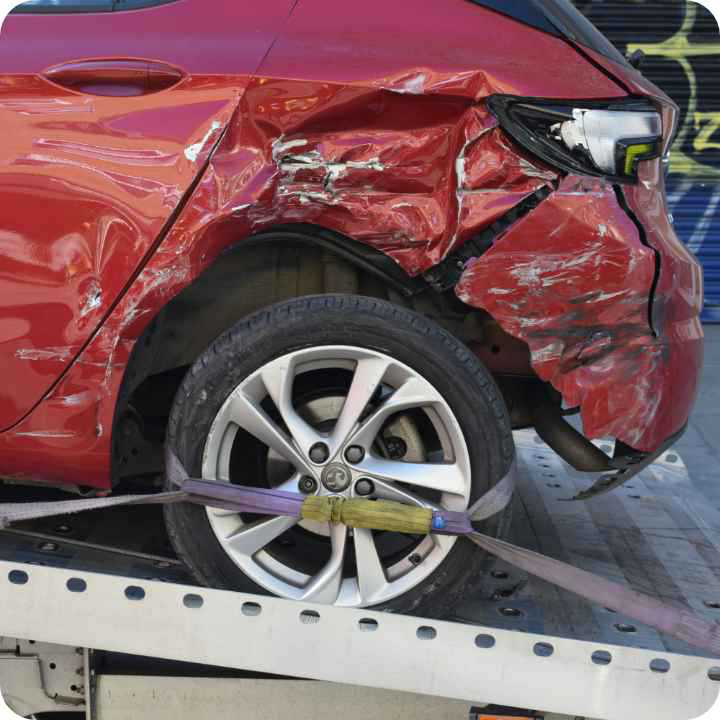
AC joint separation usually results from acute trauma. The most frequent cause is falling directly onto the shoulder or an outstretched arm. Hence, such injuries are common in contact sports like football, rugby, or hockey. Other causes may include:
- Road Traffic accidents - A sudden impact can lead to significant forces on the shoulder.
- Blunt force trauma - Activities like weightlifting can also place excessive stress on the AC joint.
- Genetic factors - Some people may be more susceptible to joint injuries.
Symptoms of AC Joint Separation
Symptoms can vary based on the extent of the injury from mild to severe. Common symptoms include:
- Pain and tenderness- Pain over the AC joint that may radiate into the shoulder and upper arm.
- Swelling and bruising - Inflammation and skin discolouration often develops around the injured joint tissues.
- Deformity - In severe cases, a bump may appear on the shoulder due to AC joint separation.
- Restricted range of motion - Difficulty in raising the arm or doing overhead activities.
- Pain during movement - Activities requiring shoulder use may worsen discomfort.
Differential Diagnosis
Effective treatment relies on a proper diagnosis. Conditions that may mimic AC joint separation include:
- Rotator cuff injuries - These injuries involve damage to the muscles and tendons around the shoulder.
- Shoulder dislocation - The upper arm bone (Humerus) comes out of the shoulder joint (Glenohumeral), causing distinct symptoms and management strategies.
- Fractures - Clavicle or shoulder blade fractures may present similar symptoms.
- Arthritis - Degenerative changes in the joint may lead to pain and dysfunction.
Accurate diagnosis may involve a thorough physical exam and possibly imaging, MRI or X-ray.
Treatment Options
Treatment for AC joint separation injuries varies based on the severity. Grades are used for injury severity from mild type I to severe VI. Treatment approaches may include:
- Conservative management - This approach typically involves rest, ice application, anti-inflammatory medications, and manual therapy for mild cases (type I and II).
- Surgical intervention - For more severe injuries (type III and above), surgery may involve repairing torn ligaments and restoring joint stability, followed by manual therapy.
Self-Care Strategies
Regardless of severity, certain self-care strategies can aid recovery and reduce discomfort:
- Protection - Preventing further injury to injured tissues and structures through slings, strapping or taping.
- Rest - Allowing the joint to heal by avoiding aggravating activities is paramount.
- Ice therapy - Applying ice packs for 15-20 minutes several times a day can help manage swelling and pain, though it can slow healing if overused.
- Pain management - Over-the-counter pain medications can be effective, such as ibuprofen or paracetamol.
- Manual therapy - Supervised rehabilitation can improve range of motion and strength post-injury.
The article was written by Terry Davis MChiro, GradCertMentHlth, BSc. (Hons), Adv. Dip. Rem. Massag., Cert. WHS.
If you liked this article or found it interesting, feel free to share the content with others. There are lots more articles available via the TotalMSK main Health, Wellness and Sports Injury blog page, which has a brief description of all the articles to date.
About the Author
As of December 31st 2020, the author chose to leave the Chiropractic profession due to a planned move back to Australia, where his training and education are not recognised. Terry no longer works as a Chiropractor and works as a Myotherapist in Morningside, Brisbane. He developed an early interest in soft tissue therapy and Myofascial Release Techniques and that interest has continued to develop since 2006. Terry's interests in human performance and trauma have naturally led to him developing a specialism in treating work and sports-related musculoskeletal injuries and Chronic Pain symptoms.
The author possesses an unusual background for somebody who trained in the McTimoney Chiropractic technique. His education, training, and practical experience span over two decades and relate to health's physical and mental aspects. He also needed to push his body and mind to the limits of physical and psychological endurance as part of his time serving in Britain's elite military forces. His education includes a bachelor of science degree in Business Management, with a specialisation in psychology and mental health in the workplace, an Masters of Chiropractic, MChiro, a Postgraduate Certificate in Mental Health and a multitude of soft tissue therapy qualifications (see the about section for more details). His soft tissue qualifications range from certificate level right through to a BTEC Level 5 Advanced Diploma in Clinical Sports and Remedial Massage Therapy. He has also taught as a senior course coach teaching Remedial Massage and the Advanced Diploma Myotherapy in Australia. His teaching involved both theoretical and practical aspects, including advanced Myofascial Release Techniques and has certification in training and assessment. Terry will have taught many of the first students to train as Myotherapists in Brisbane. Terry's combination of knowledge through education, training, elite military service, and personal injury history has paid dividends for the patients he sees and has treated over the last 19 years. Terry is still extremely active and enjoys distance running, kayaking, mountain biking and endurance-type activities.